Studies from Harvard Business Review show that consumers are exposed to thousands of brand messages daily, from digital ads to physical signage. This constant bombardment creates a challenge: how can a single logo or brand identity stand out in such a crowded visual environment? At events, where multiple sponsors and companies compete for attention, the problem becomes even more pronounced. Guests are surrounded by logos, colors, and slogans, making it difficult for any one brand to leave a lasting impression.
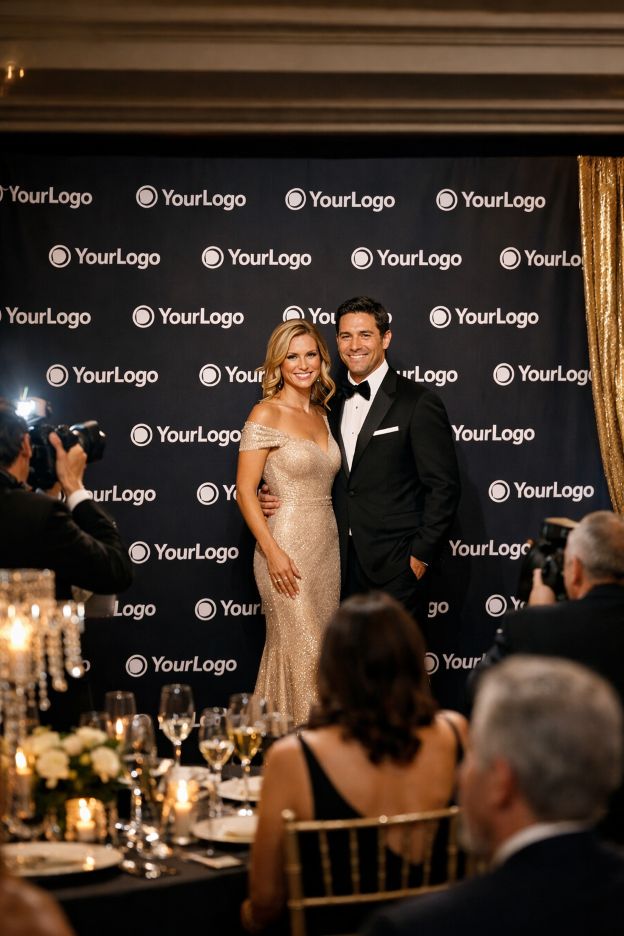
One practical solution has emerged in event marketing: the step and repeat banner NYC organizers often rely on. This design format uses repeated logo patterns across a backdrop, ensuring that every photo taken in front of it reinforces brand visibility. But why does repetition work so effectively? The answer lies in cognitive psychology and the science of pattern recognition.
The Problem: Visual Overload at Events
Large gatherings such as trade shows, galas, or product launches are saturated with competing visuals. Research from Stanford University indicates that the human brain processes images 60,000 times faster than text, yet it struggles when multiple stimuli compete for attention. This phenomenon, known as cognitive overload, reduces the likelihood of any single brand being remembered. Guests may enjoy the event but leave with blurred impressions of who sponsored it or which logos they saw most often.
Brands invest heavily in sponsorships and event presence, but without a clear visual strategy, their logos risk fading into the background. The challenge is not just visibility, it is recall. A logo must be seen, recognized, and remembered long after the event ends.
The Bridge: Science of Repetition and Recognition
Psychologists have long studied how repetition influences memory. The mere exposure effect, first identified by researcher Robert Zajonc, shows that people develop a preference for stimuli they encounter repeatedly. In branding terms, the more often an audience sees a logo, the more familiar and trustworthy it feels. This effect is subtle but powerful, shaping consumer attitudes without conscious effort.
Another concept, visual anchoring, explains how repeated patterns help the brain organize information. When logos are displayed in a consistent, repeating format, they create a stable reference point. Guests scanning a busy environment can quickly identify and recall the brand because the repetition reduces cognitive strain. Studies published in the Journal of Consumer Research confirm that repeated visual cues enhance recognition and recall compared to single exposures.
The Solution: Applying Psychology Through Design
This is where repeated logo patterns become more than decoration; they are strategic tools. A step and repeat backdrop leverages the mere exposure effect by ensuring that every photograph taken at an event contains the sponsor’s logo multiple times. Whether shared on social media or printed in press coverage, the brand gains repeated exposure without additional effort.
Experts in event marketing note that these backdrops serve dual purposes: they provide a professional setting for photos while reinforcing brand identity. The repetition is not accidental; it is carefully designed to maximize recall. Each logo placement acts as a visual anchor, guiding the viewer’s eye and embedding the brand into memory.
Key Psychological Principles at Work
- Mere exposure effect: Familiarity breeds preference, making repeated logos feel more trustworthy.
- Visual anchoring: Repetition organizes perception, helping audiences recall logos amidst clutter.
- Reduced cognitive load: Consistent patterns simplify recognition, allowing the brain to focus on the brand.
- Pattern recognition: The brain naturally seeks order, and repeated logos provide it.
Case Studies and Real-World Evidence
Event photography provides compelling evidence of the effectiveness of repeated logo patterns. At film premieres, sports events, and corporate galas, step and repeat backdrops dominate the visual landscape. Every celebrity photo or guest snapshot becomes a branded asset. Event Marketing Institute data shows that branded backdrops increase sponsor recall rates by over 30% compared to events without them.
Similarly, research from University College London highlights that repeated logo exposure in event settings creates stronger memory associations than single logo placements. Guests may forget specific details of the event, but they are more likely to remember the logos they saw repeatedly in photos and videos.
Why It Works in NYC and Beyond
New York City, with its constant stream of high-profile events, has become a hub for step and repeat design. From fashion shows to charity galas, organizers recognize that repeated logo patterns are not just aesthetic; they are psychological tools. The crowded media environment of NYC amplifies the need for repetition, ensuring that brands remain visible in press coverage and social media feeds. Similar principles apply in EPL broadcasting and real-time learning, where consistent visual cues help audiences connect information with identity, reinforcing recognition through repetition.
While the principle applies globally, the density of events in NYC makes the strategy particularly valuable. Each photo taken at a branded backdrop becomes a micro-advertisement, extending the brand’s reach far beyond the event itself.
Conclusion: The Science Behind the Strategy
Repeated logo patterns are more than a design choice, they are grounded in cognitive psychology. By leveraging the mere exposure effect and visual anchoring, brands can cut through the noise of crowded events and secure lasting recall. The step and repeat format exemplifies how science translates into practical marketing solutions, turning every photo into a reinforcement of brand identity.
For companies seeking visibility in competitive environments, repetition is not redundancy, it is strategy. Whether in NYC or elsewhere, the science is clear: repeated patterns help audiences remember, trust, and recognize brands long after the event ends.